Three of the best kiteboards currently on the market

Three of the best kiteboards currently on the market


The three best kiteboards currently on the market have more in common than meets the eye.
In this post, we compare the three concepts and highlight the similarities and differences.

The board selection

For a closer look at the three best kiteboards currently on the market, we have selected the following models:

(Listed in alphabetical order)

CARVED IMPERATOR PRO

Image: CARVED IMPERATOR PRO

LIEUWE FALCON

Image: LIEUWE FALCON

WOODBOARD CRBN LITORAL

Image: WOODBOARD CRBN LITORAL

CARVED IMPERATOR PRO

The CARVED IMPERATOR PRO is a masterpiece of board engineering. It is handmade, featuring a thin-layer carbon fiber layup and a wood core at its heart.

In terms of shape, the hull features a pronounced keel that curves into a double concave towards the rails. Combined with the overall shape, this gives the board a very smooth ride, even in choppy conditions. The double concave transitions into a slight mono-concave at the tips, providing optimal tracking at the moment of take-off.

LIEUWE FALCON

The FALCON is an incredibly lightweight big air kiteboard. Years of research and development have gone into making it a comfortable big air booster. It offers incredible speed, pop, and response without the usual drawbacks of a typically stiff carbon kiteboard.

The visual impression is convincing.

WOODBOARD CRBN LITORAL

The new CRBN LITORAL shares almost the same shape as the classic CRBN, but the single concave has been replaced by a double concave on the hull.
This ensures soft and stable landings—a key advantage in airstyle and big air. The loose feel underfoot, the incredible upwind and low-end performance, and the highly communicative edge have all been retained.

Look and feel go hand in hand; it's another masterpiece.

What are the similarities?

1. Made in the EU

It may be no coincidence that the three best kiteboards currently on the market are made in the European Union rather than somewhere in the Far East. Over the years, all three brands have managed to establish a permanent role in the kite market beyond their home regions.

In addition to the high manufacturing quality in the EU, this is also a statement—a commitment to fair working conditions, high environmental and safety standards, short transport routes, and a responsible use of resources.

2. Carbon fiber and wood

Looking at the materials, we see that all three manufacturers rely on carbon fibers or woven carbon fabrics in combination with a 3D-milled wood core. This is a quality feature that clearly sets all three models apart from the mass of kiteboards. Working with carbon fiber is demanding, but the results are impressive in all three cases.

3. Double concave

It is also no coincidence that all three boards mentioned in this report feature a double concave on the hull. This offers a range of major advantages:

Soft landings as the keel breaks the surface tension of the water, directional stability during landings and in chop, and a defined pre-tension that is felt as pop during the impulse response.

Furthermore, every concave hull creates a Bernoulli effect, which generates additional lift.
Under your feet, you feel this as a loose sensation, better upwind performance, earlier planing, and more control at the high end.

Image: WOODBOARD CRBN LITORAL

4. Top side

All three designs provide a grab channel that runs almost the entire length of the board. Anyone who has tried big air maneuvers knows that a short grab channel just hinted at between the bindings is hard to catch.

Image: WOODBOARD CRBN LITORAL

5. Aesthetics

All three selected models integrate the high-quality carbon weave or fibers into the design, so you can tell which materials were used just by looking at the exterior. This creates an extraordinary look—colors or graphics take a back seat.

Image: WOODBOARD CRBN LITORAL

The differences between the three kiteboards

What sets the three best kiteboards currently on the market apart?

CARVED uses a straight outer channel running along the board's axis on the IMPERATOR PRO, as does LIEUWE on the FALCON, while WOODBOARD uses a channel curved along the outline.

Image: WOODBOARD CRBN LITORAL

The differences may be marginal. What is certain is that the Bernoulli effect is slightly more pronounced in the narrowing channel of the WOODBOARD LITORAL than in the other designs. Conversely, the straight axial channel in the IMPERATOR PRO and LIEUWE FALCON might provide marginally more control at the high end.

Kiteboard Care and Storage

Kiteboard Care and Storage


In the surf shop or webshop, the kiteboard of your choice usually looks great: bright colors, no scratches, and an intact surface without cracks or bubbles.
Here are a few tips on how to keep it that way – so you can enjoy your kiteboard for a long time.

Water

A kiteboard is built for use in water. All components are selected to be permanently resistant in both fresh and salt water.
Resistant means: The materials do not change.

I myself once found a kiteboard floating in the water while kitesurfing in Egypt. It was covered in barnacles on both sides – so it must have been floating in the water for some time, possibly years. But after removing the barnacles, it looked quite presentable again.

Conclusion:
As long as the board stays in the water, you can't really go wrong.

Sun

In the production of high-quality kiteboards, a fiberglass laminate with a surface film forms a close mechanical and chemical bond under high pressure and heat. The graphic is also applied to this film.

There is no 100% UV-resistant film on the market for this application. Most are quite resistant to UV light – but no matter which film is used, prolonged exposure to the sun can lead to changes:

  • Surface becomes cloudy
  • Finish becomes matte
  • Yellowish tinge may appear

The riding characteristics remain unaffected, the effect is purely visual.

If the board remains unprotected under the tropical sun for years, the UV radiation can even cause the film to peel off.

Heat

High-quality kiteboards, which are manufactured under high pressure and heat, usually have no problem with heat.

Different with cheap foam core boards:
The air contained in the foam bubbles expands when heated → bubbles can form on the surface.

Sometimes the bubbles go back after cooling, but:

A bubble is always a sign of delamination – usually the end of a board.

Note:

  • Cheap foam boards: Never leave them in the sun.
  • High-quality boards: Especially in tropical regions, protect them from midday heat – especially with dark colors.

Cleaning Agents

The best cleaning agent for a kiteboard is: water.

Basic Rules:

  • After each session: Rinse off
  • Before winter: Clean thoroughly

For Adhesive Residue:

  • Olive oil helps.
    The oil molecules penetrate under the adhesive, and it can be removed with circular movements.

For Heavier Soiling:

  • Diesel oil or gasoline help, e.g. with heavy oil stains.

ATTENTION:
NEVER use acetone or acetone-containing cleaning agents!

A single application is enough to ruin the surface.
This includes e.g.: Brake cleaner, K2R, acetone cleaner.
Acetone = poison for kiteboards.

Stones

A kiteboard is designed for water – but you still ride over a stone in shallow water every now and then.

What to Do with Scratches?

  • Only superficial? → Remove protruding material with a sharp knife.
  • Fabric damaged? → Seal with fiberglass particles + superglue.

Small scratches are usually not a problem, as long as no water penetrates. Because due to hygroscopic expansion, the board can otherwise delaminate.

Important:

  • Seal first, then continue using.
  • The above method works very well with a little skill.

Storage

If a kiteboard is not used for a long time:

  • Rinse thoroughly
  • Protect from temperature differences
  • Store in a dry place

Why Dry?

Mildew stains can form on the surface in damp cellars. A contributing factor is mold spores. These can be removed with acetone-containing mold removers – but as you know:

Acetone must NEVER be used on a kiteboard!

Conclusion:
A dry, cool place is the best storage place for your kiteboard.

Maintenance

Straps & Pads:

  • Disassemble, rinse, dry, store separately
  • Remaining salt water can drastically reduce the lifespan

Inserts & Screws:

  • Lightly grease, e.g. with:

    • Machine grease
    • Olive oil
    • Lard
    • Butter (yes, it works!)

Conclusion

If you take care of your kiteboard, you will enjoy it longer.

With a few simple basic rules, you can significantly extend the fun and lifespan – no matter whether you are on the lake, in the sea or in the tropics.

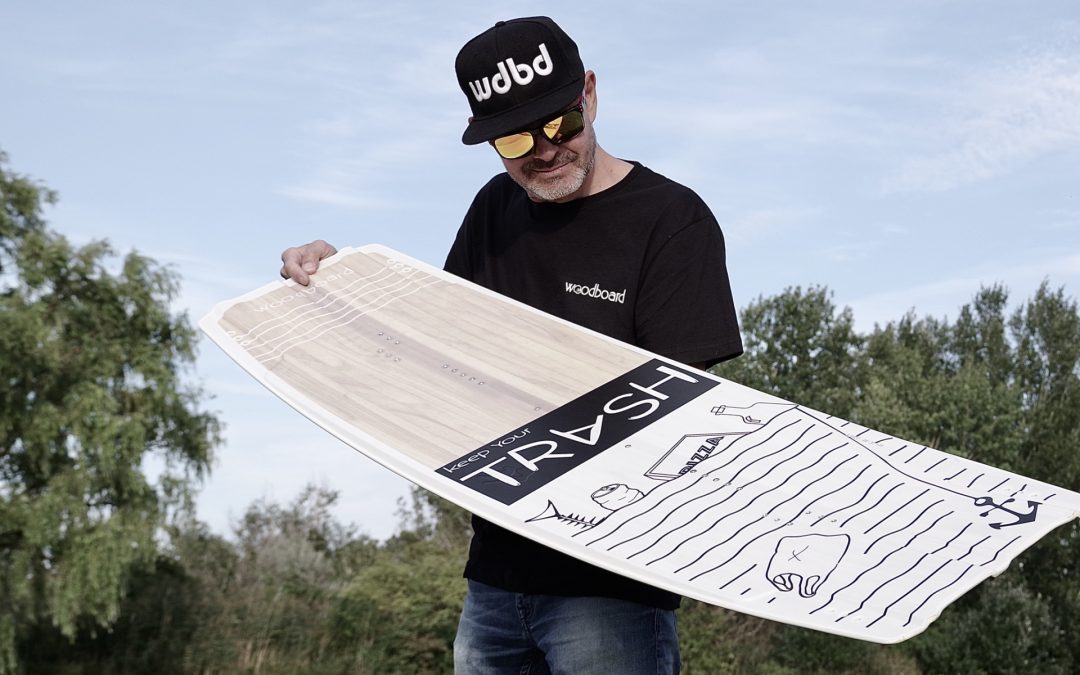
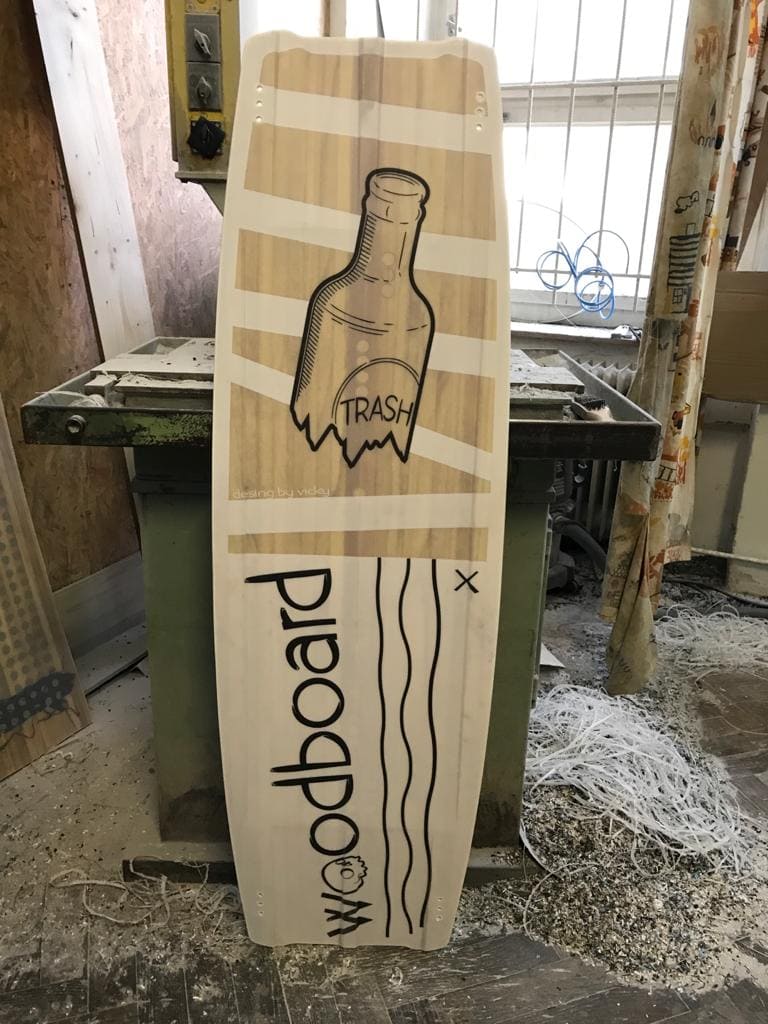
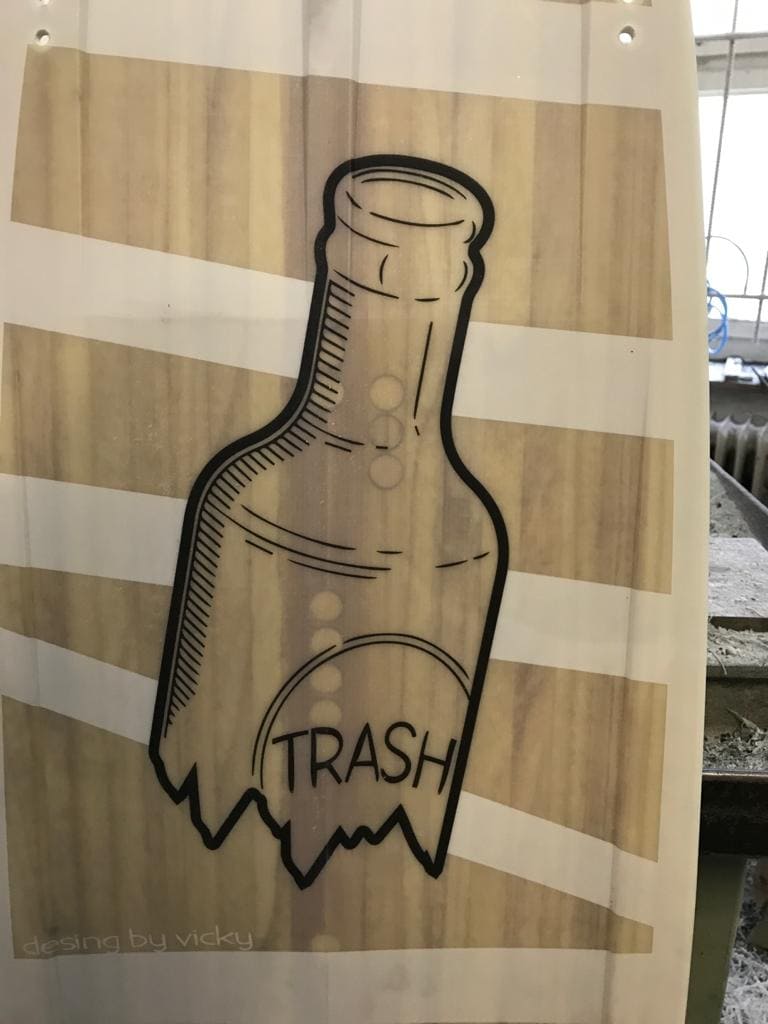
The brand new Woodboard TRASH – The ultimative Freestyle & Wakestyle kiteboard!

The brand new Woodboard TRASH – The ultimative Freestyle & Wakestyle kiteboard!

Woodboard Trash Freestyle Wakestyle Kiteboard

Construction

Compared to the previous model from 2020, the 2021 model is a little harder in the overall setting, a tad heavier (138 -> 3000g, 143 -> 3100g) which gives the rider a little more orientation in aviation, and with a significantly faster impulse response.

The three-dimensional wooden core is reinforced with beech wood in the middle of the board, and the tried and tested Quadrax glass fiber fabric is used as the scrim material. The WOODBOARD TRASH has unbelievable pop due to the deep channels and the fast impulse response and lands soft and directionally stable. The double concave does a great job here, even shitty landings are easy.

The Trash 2021 is available in lengths of 138 x 41 and 143 x 42, the 133 x 40 is still available in the old design.

Engineering

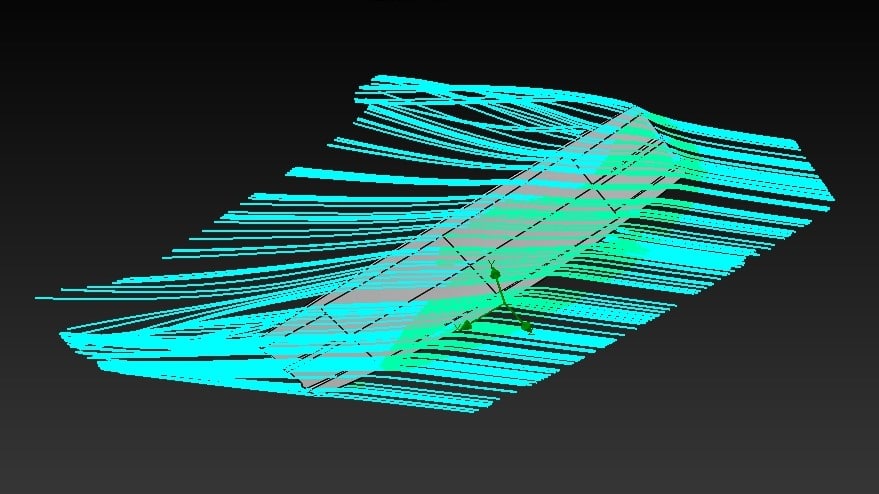
On the picture you can see how the board offers resistance to the water when jumping, whereby a maximum of energy can be converted into height. The arrangement of the channels was optimized with the help of the flow simulation.

Check Instagram for our #woodboardengineering posts or visit our Engineering page for more interesting technical research!

Woodboard Trash Freestyle Wakestyle Kiteboard

Characteristics

The Trash is the perfect kiteboard for unhooked freestyle and wakestyle, also really suitable for hooked freestyle. You can rely on it while doing a handlepass as well as a megaloop. Use boots or common straps, it is up to you.

The board has the grip and pop you need for your freestyle tricks! The multichannel on the tip guarantees maximum resistance at the point of take-off, and prevents loss of strength due to slipping or flexing. The hard overall characteristics effectively convert the speed into air, while the double concave breaks through the surface tension during impact and ensures a pleasant and controlled landing. 

Also it is equipped with an extra hard and abrasion-resistant running base for fun on the slider or kicker!

What our riders say about the Trash:

What I love about the new Trash? Actually everything. It looks better than the old one, it is stiffer so the response during the takeoff is much better. I can rely on what I feel before the jump and I know, even if I mess up, the landing will be still soft and controlled. This is important for me, there is no progress if you are afraid of something, you can even get hurt!

Bibiana Magaji

I lile to mix it up – handlepasses, big air or just a normal board off. For all this applications the WOODBOARD TRASH is my first choice for a good session.

Lucas Pisoni

I've never had such a good board under my feet as the WOODBOARD TRASH. It's just amazing! Thanks to the designer!

Michaela Lang

I like the high rocker line combined with the double concave on the bottom ! This makes the Trash so unique. I can always rely on this setup and gain confidence to land my tricks, even in the stronger winds.  

Niklas Ramirez

I am really into the chop-eating freestyler, great feeling to be able to correct (almost) all landings after the explosive pop. All day riding and fat downwinders are honestly always a joy - thank you knees!

David Trost

Have a look on our TRASH video:

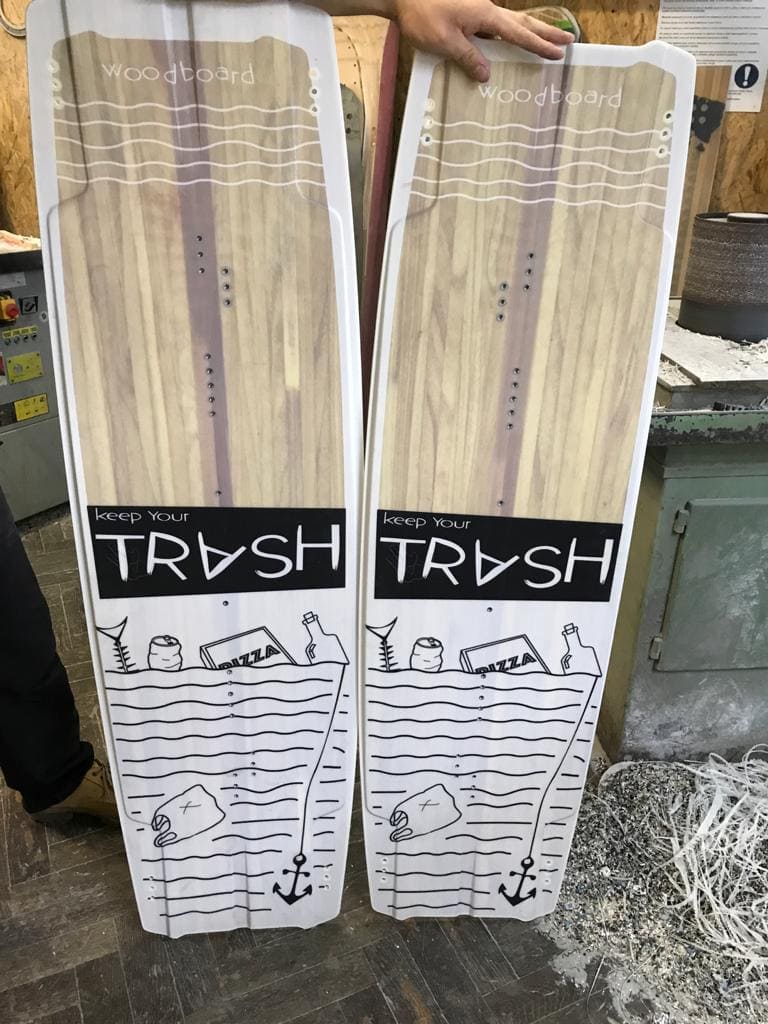
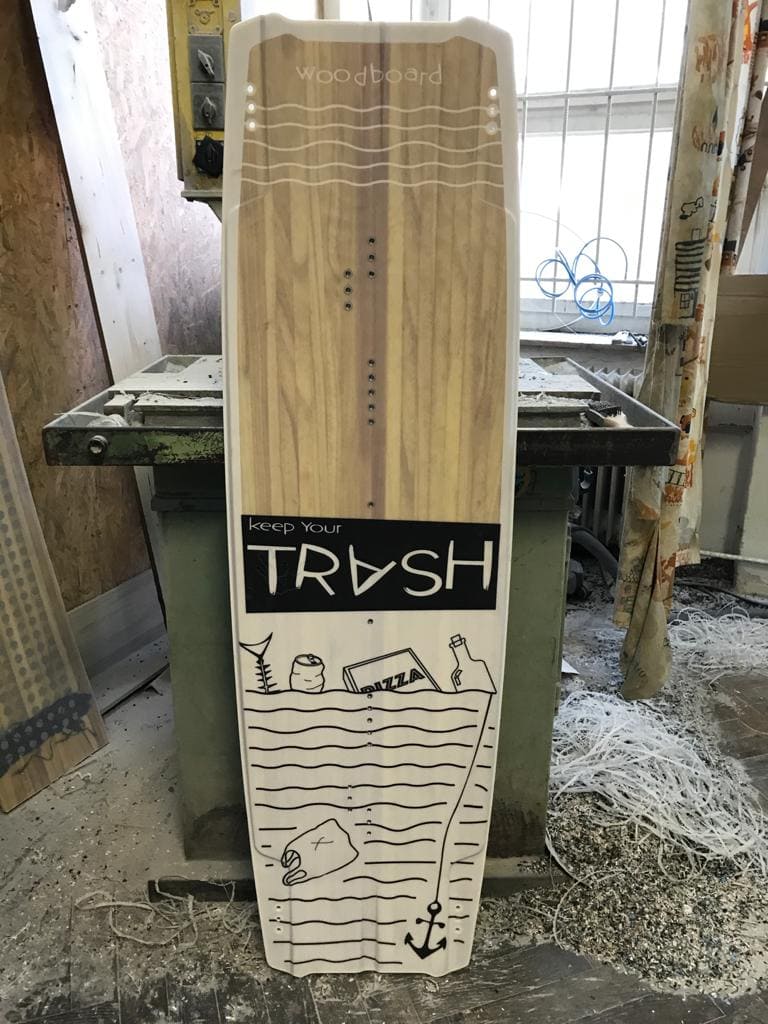
Some impressions from our workshop:

FOLLOW OUR SOCIAL MEDIA TO STAY UP TO DATE

[]